




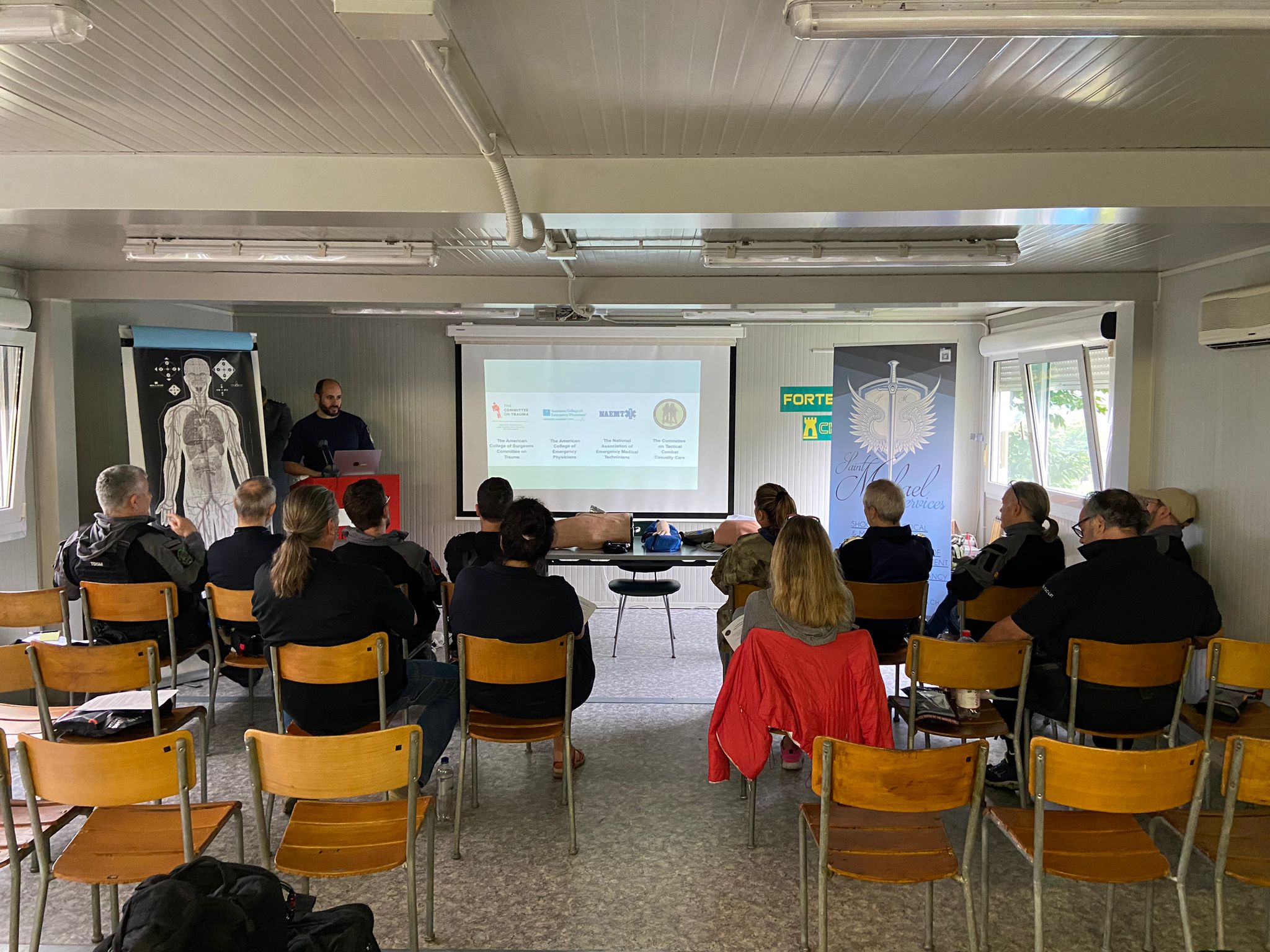
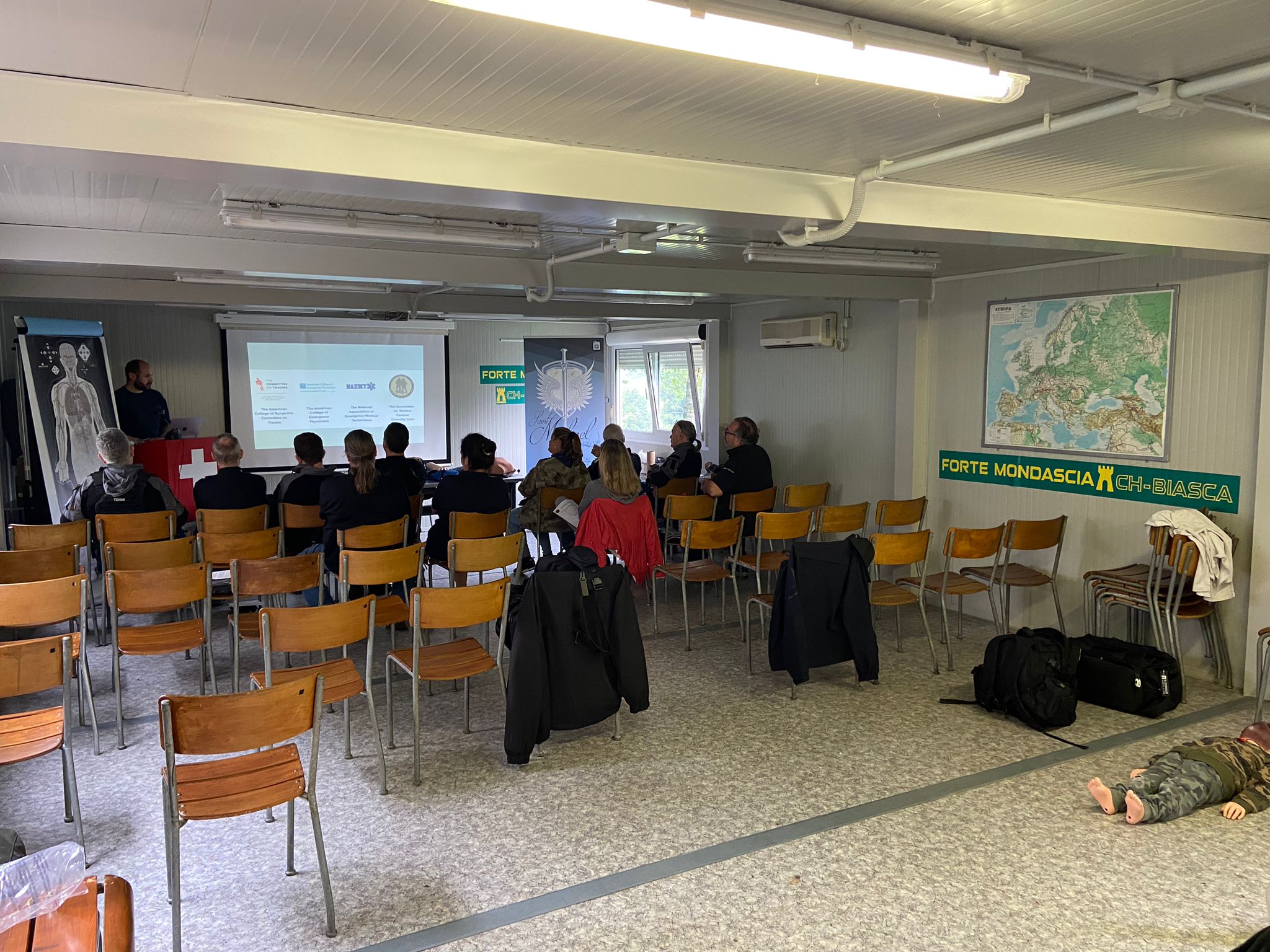
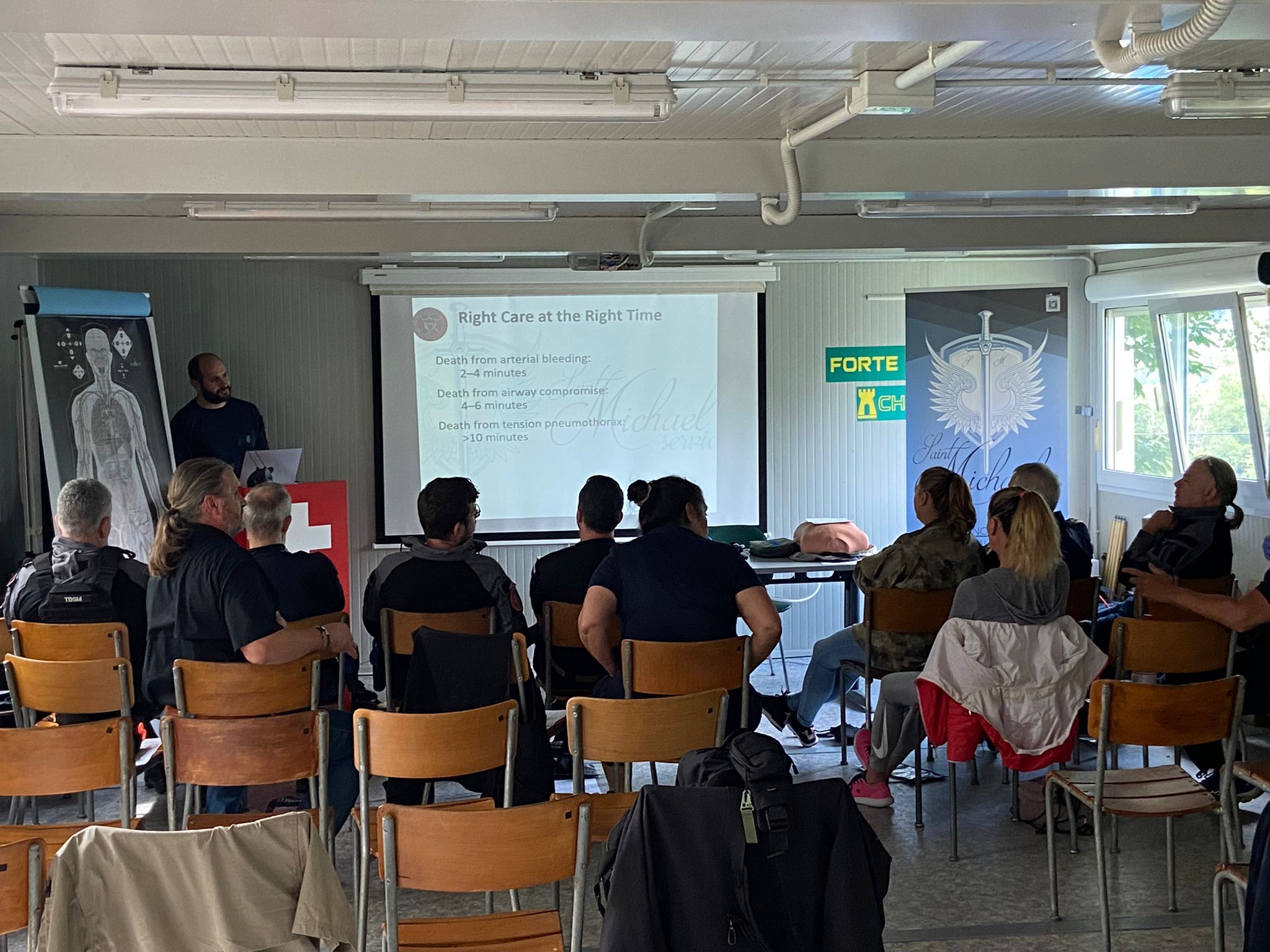
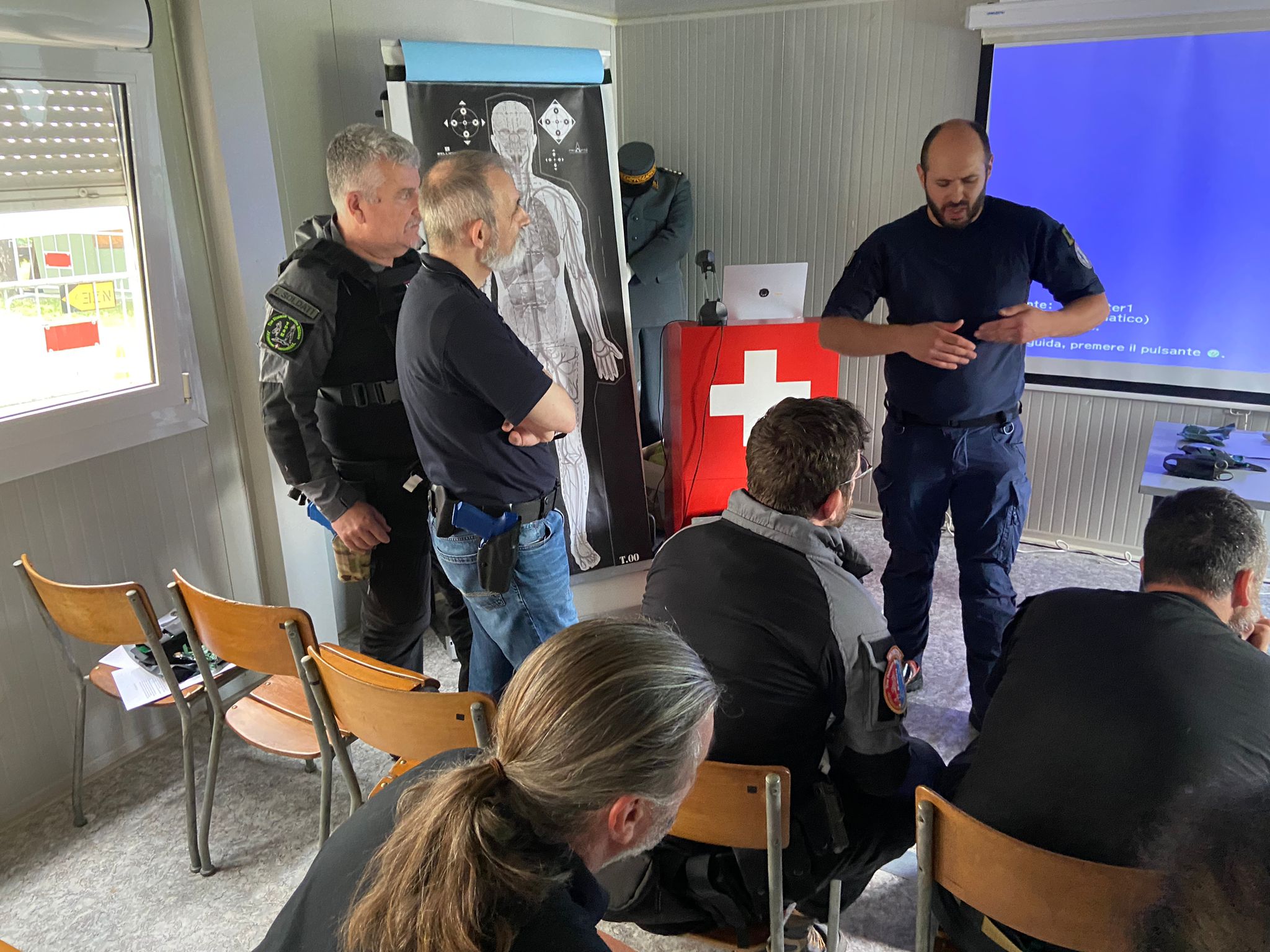
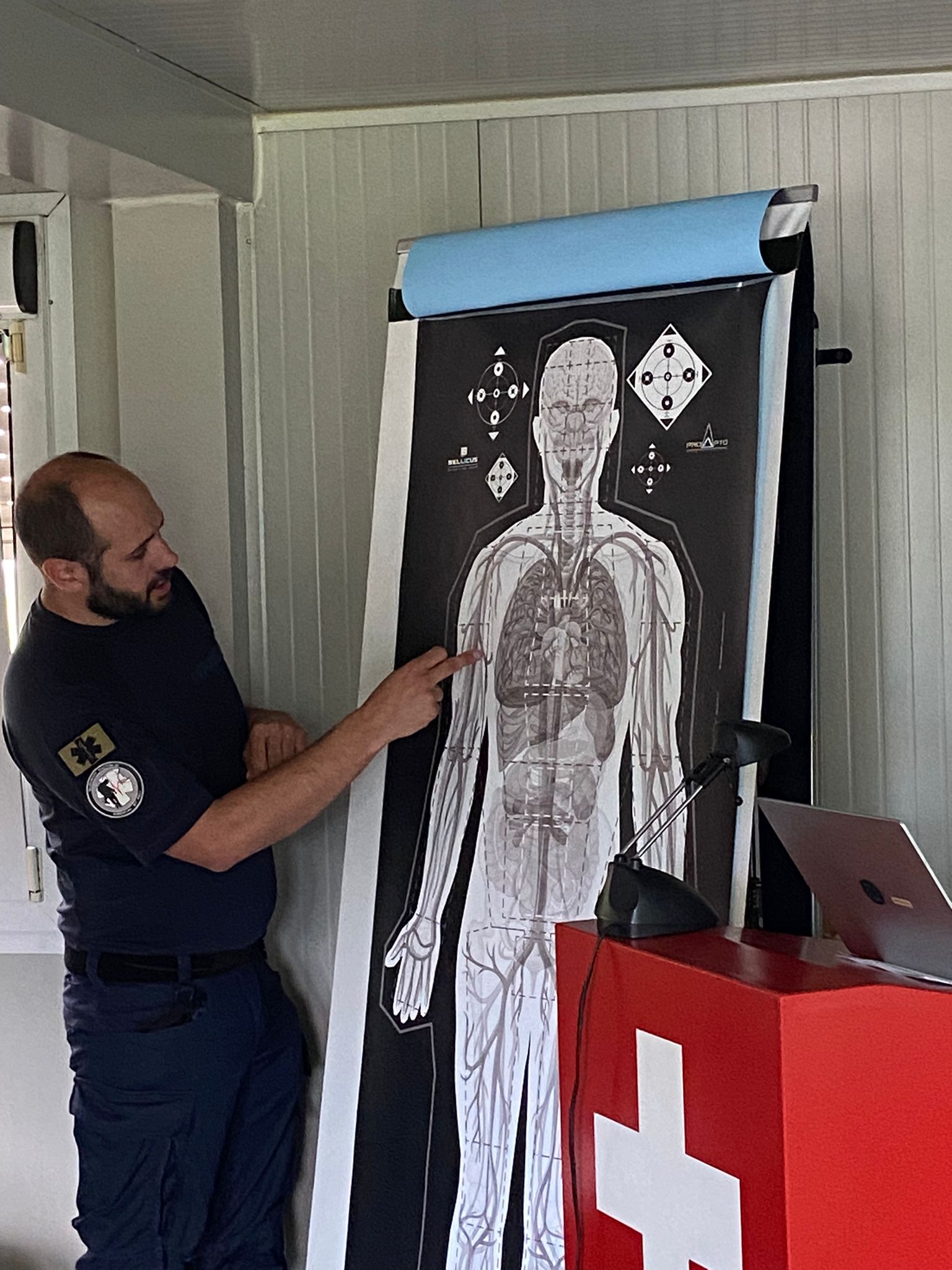
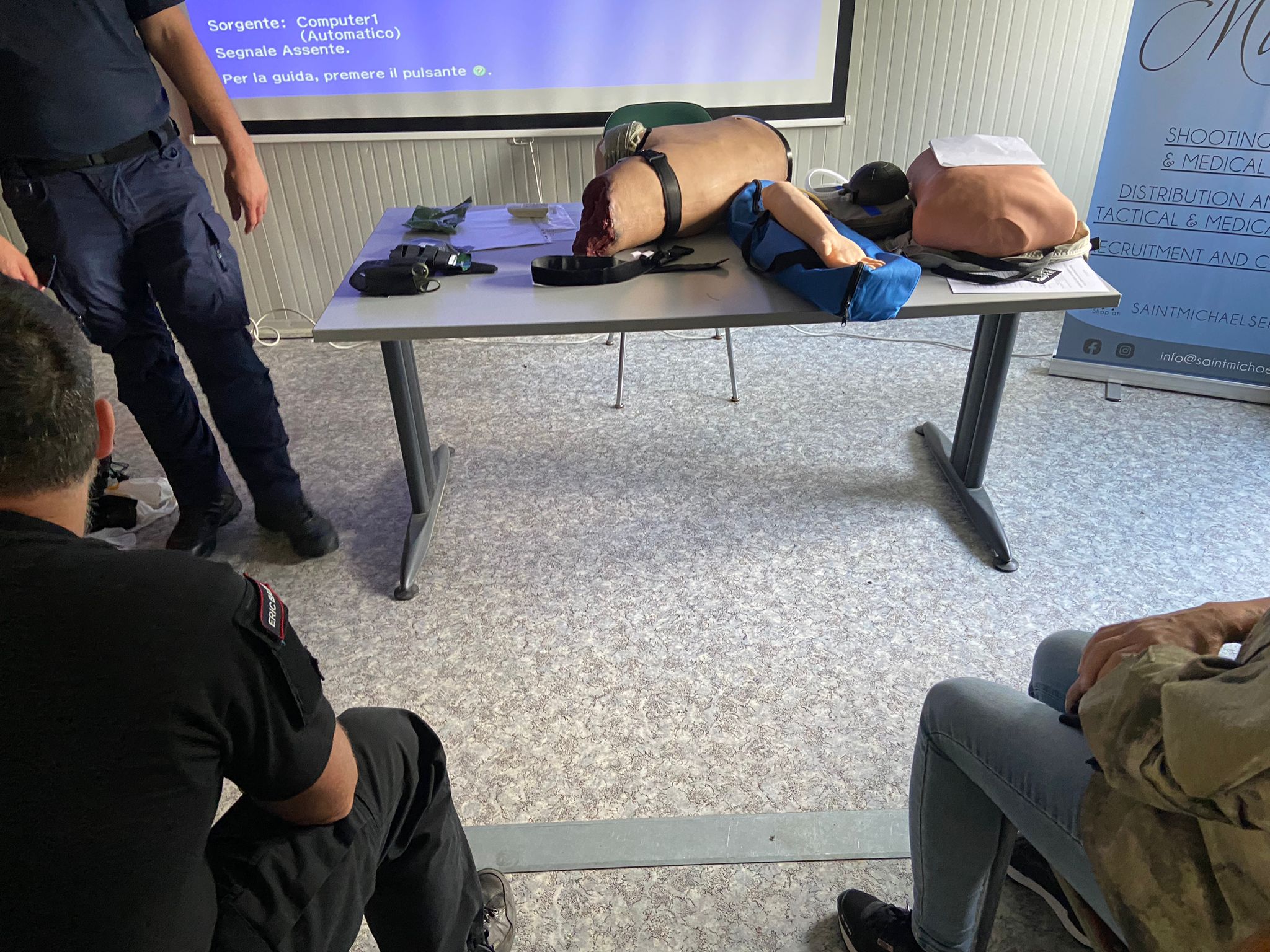
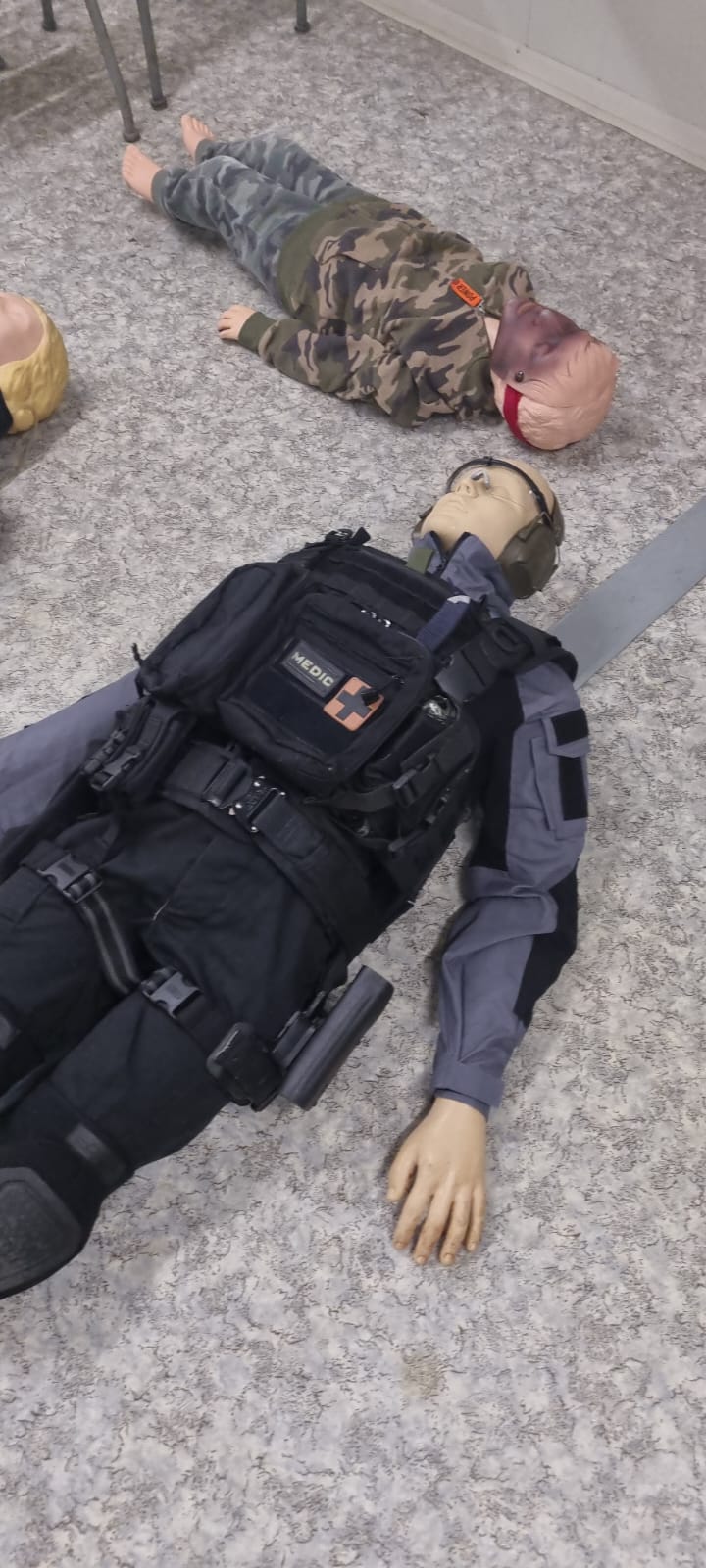
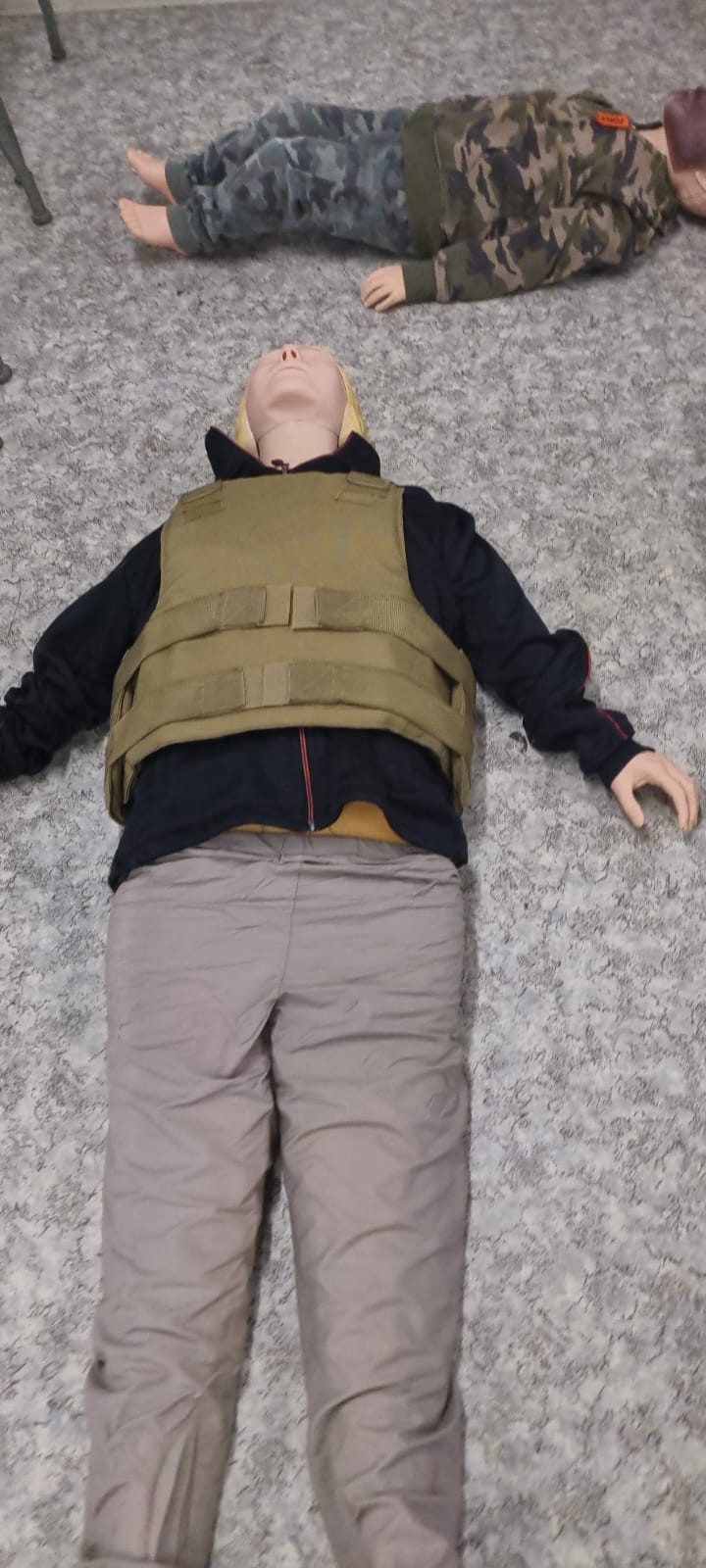
IPSC Security Officer Medic Kurs – SMAT Combat Medic TECC Level 1
The course is accredited with the IPSC and the Swiss Association for Dynamic Shooting as Authorised “Security Officer – Medic Kurs”
Course Goals
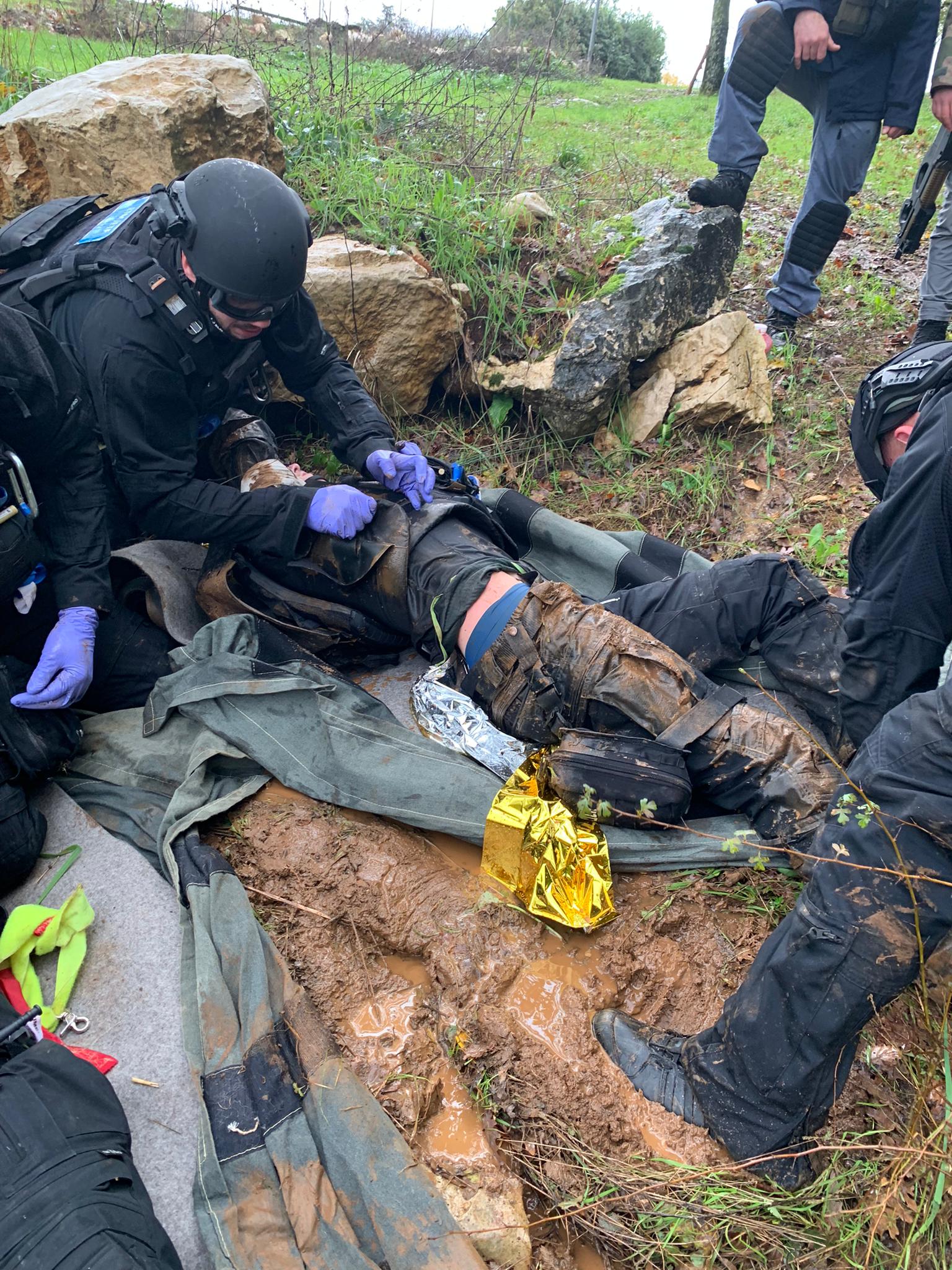
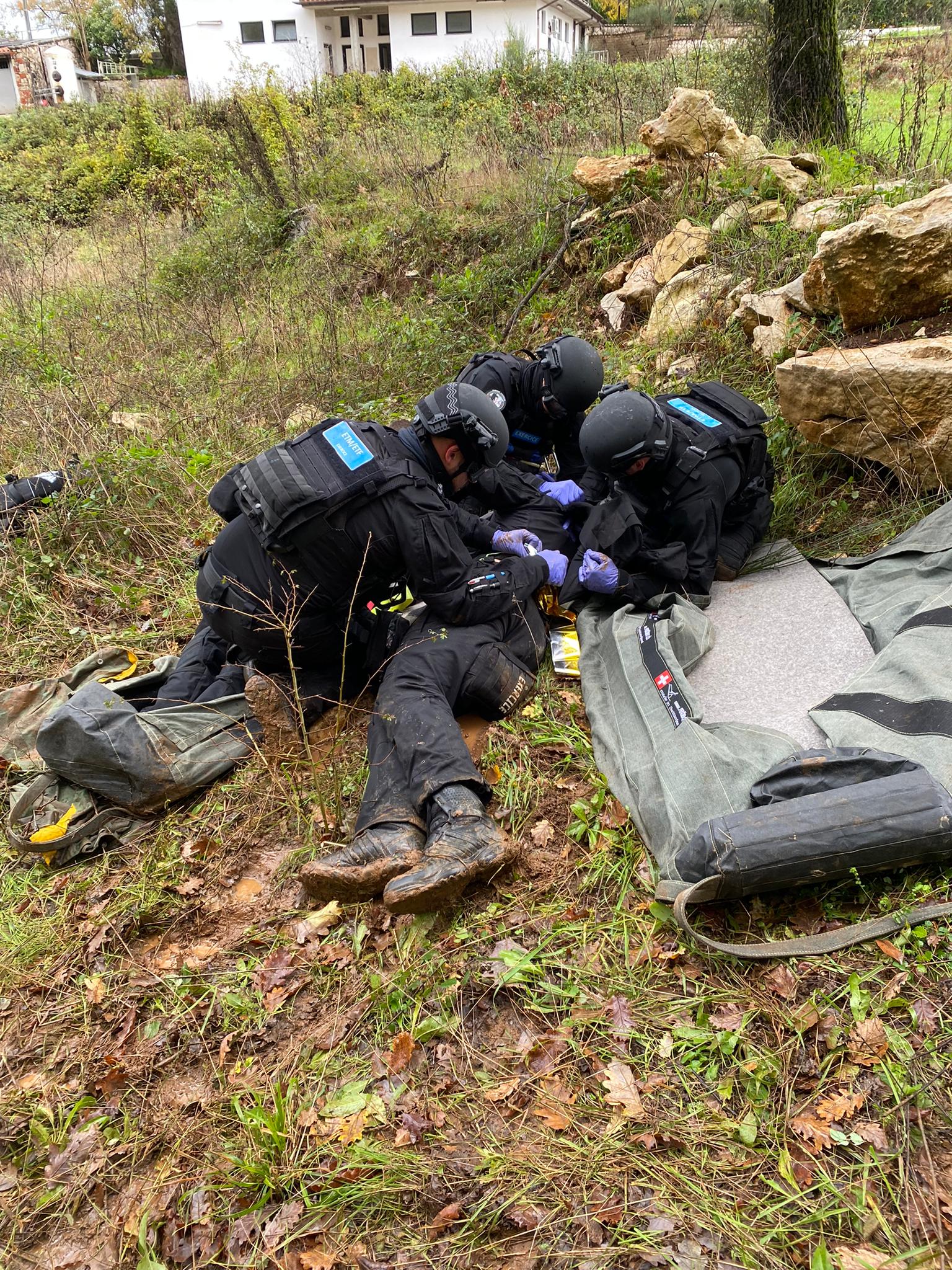
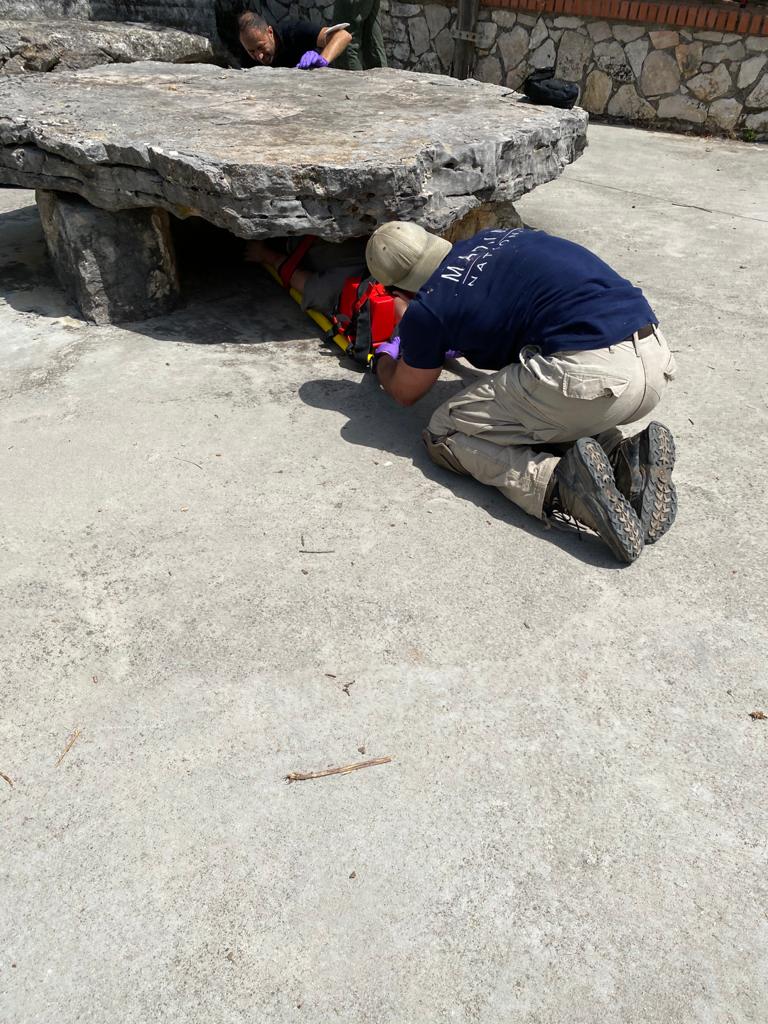
The applications of the TECC guidelines for civilian Fire/EMS medical operations are far reaching, beyond just the traditional application in tactical and law enforcement operations. The medical response to almost any civilian scenario involving high risk to responders, austere environments, or atypical hazards will benefit from the guidelines, including active shooter response, CBRNE and Terrorism related events, mass casualty, wilderness/austere scenarios, technical rescue events, and even traditional trauma response.
The goals of Tactical Emergency Casualty Care include:
- To balance the threat, civilian scope of practice, differences in civilian population, medical equipment limits, and variable resources for response to atypical emergencies
- To establish a framework that balances risk:benefit ratio for all civilian operational medical response
- To provide guidance on medical management of preventable deaths at or near the point of wounding
- To miniminize provider risk while maximizing patient benefit
Course Content
Syllabus
- Preparation and use of a personal IFAK (one for each student is included in the course fee)
- TECC principles: the Three phases of care
- Patient assessment (M.A.R.C.H.)
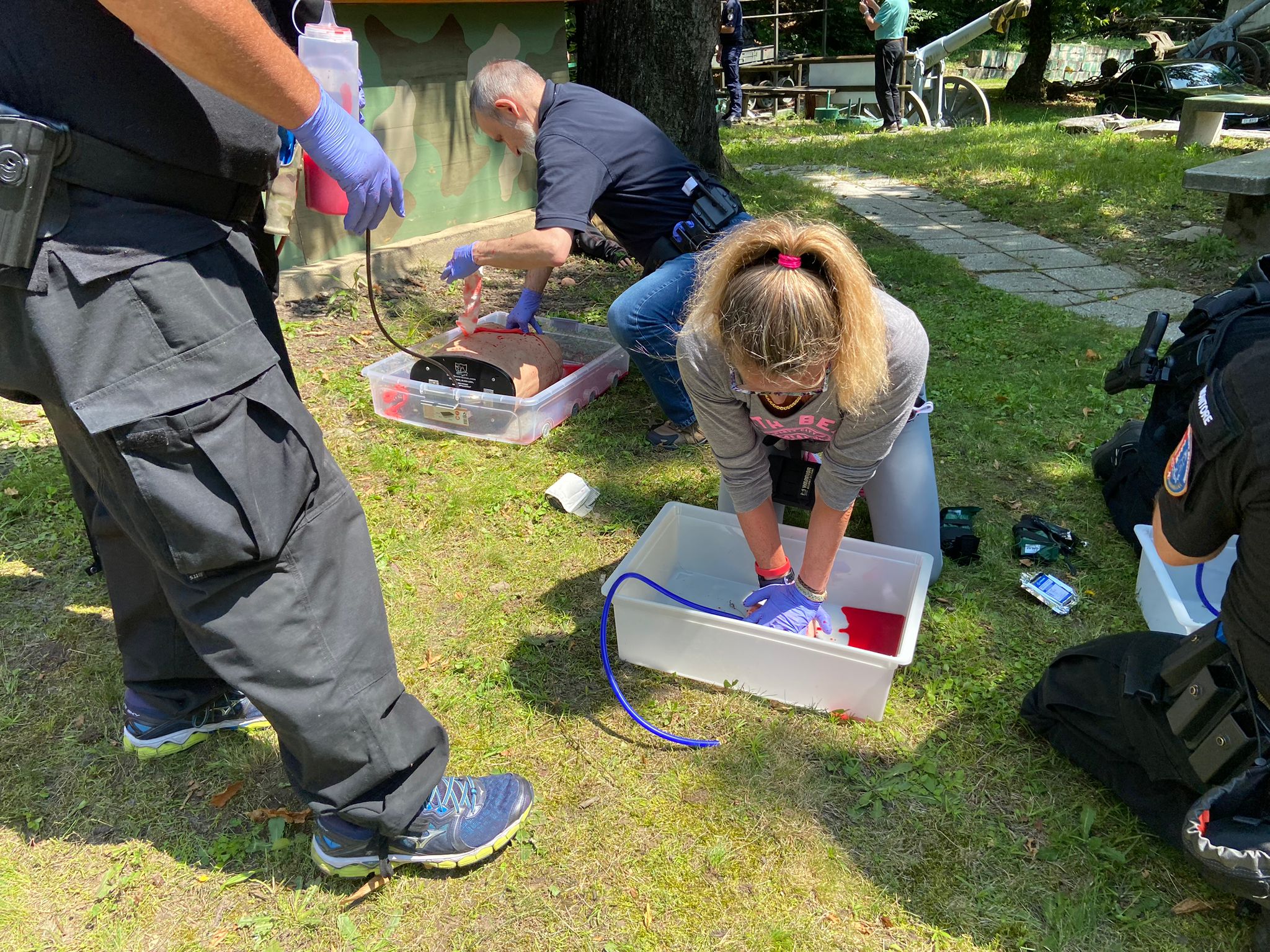
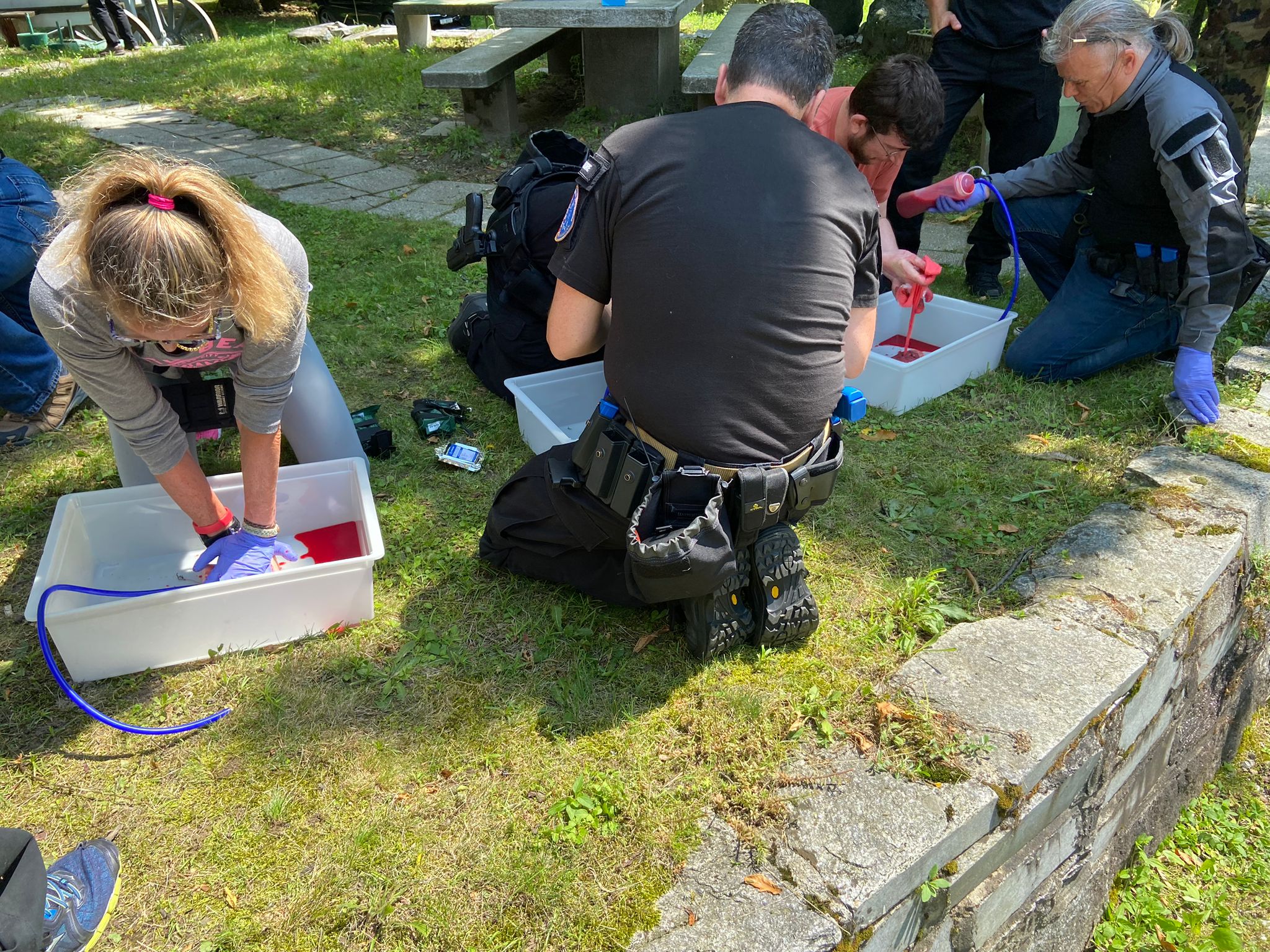
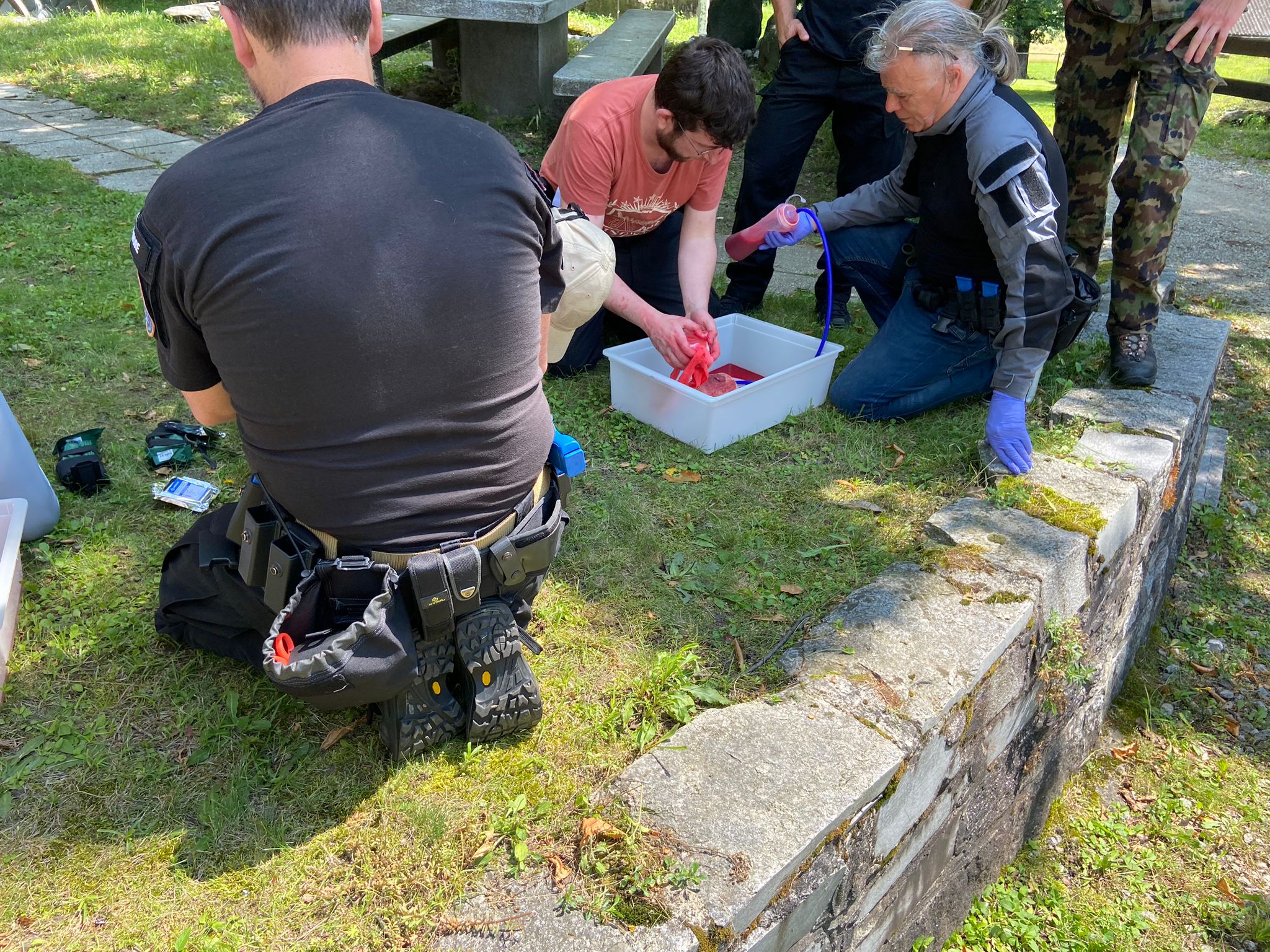
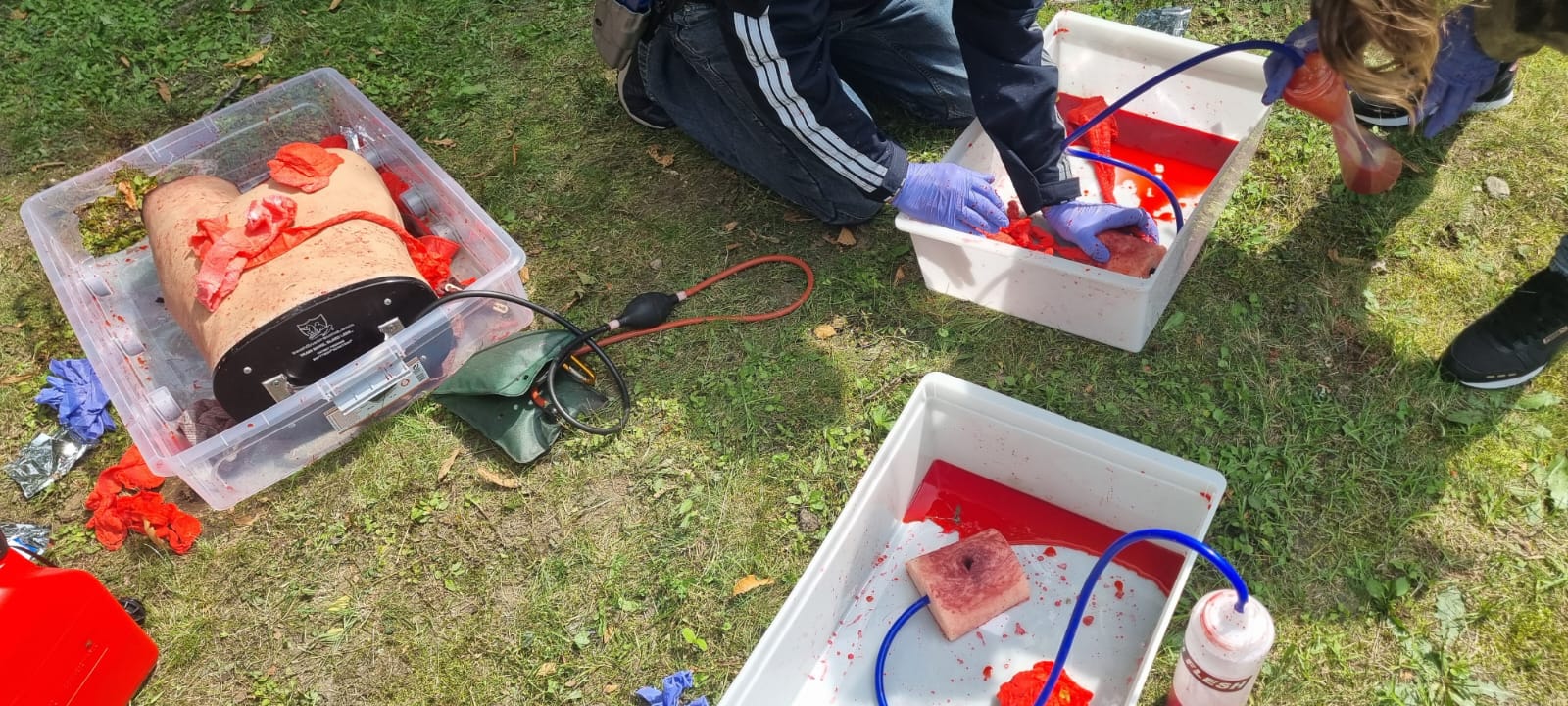
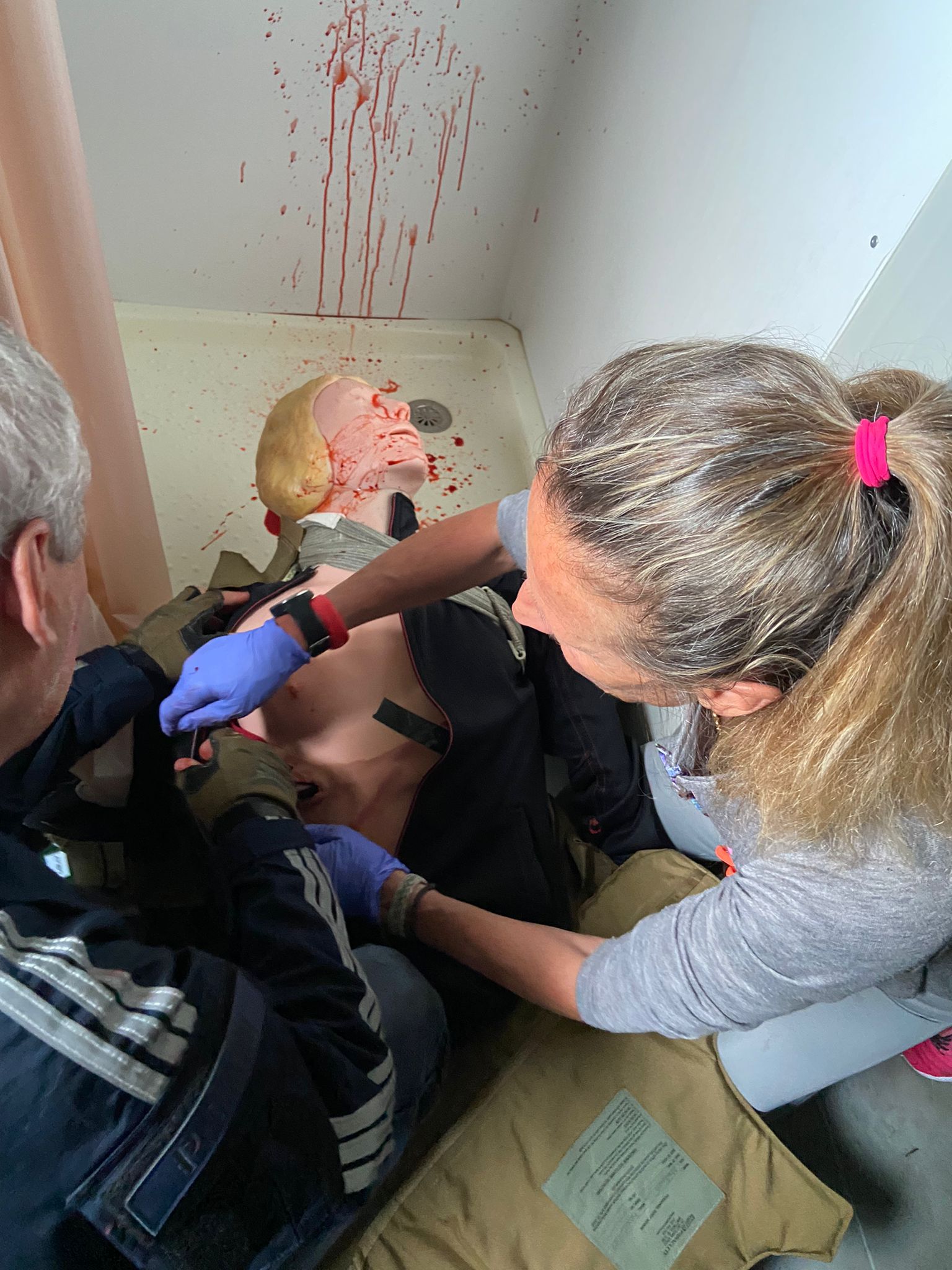
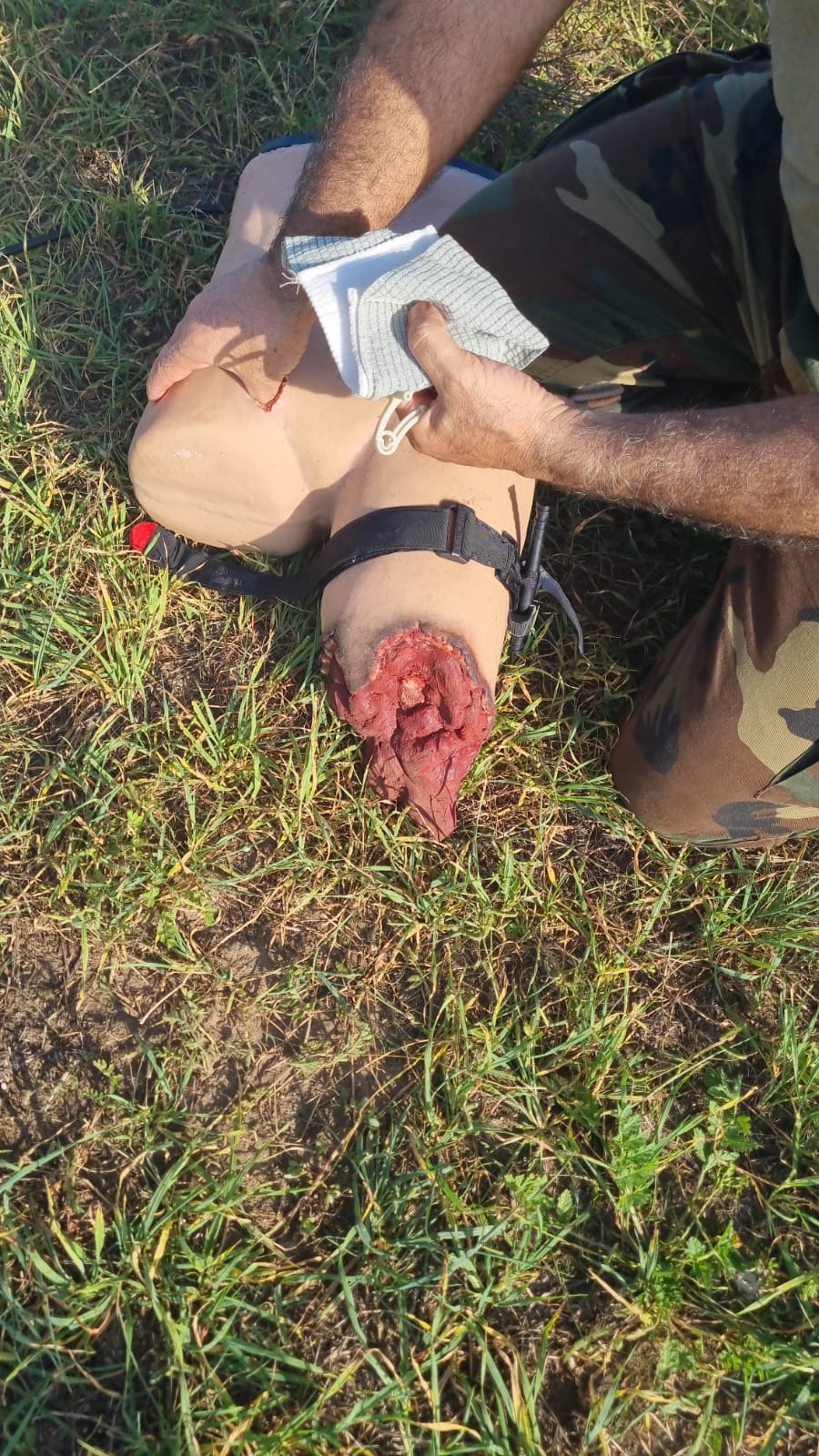
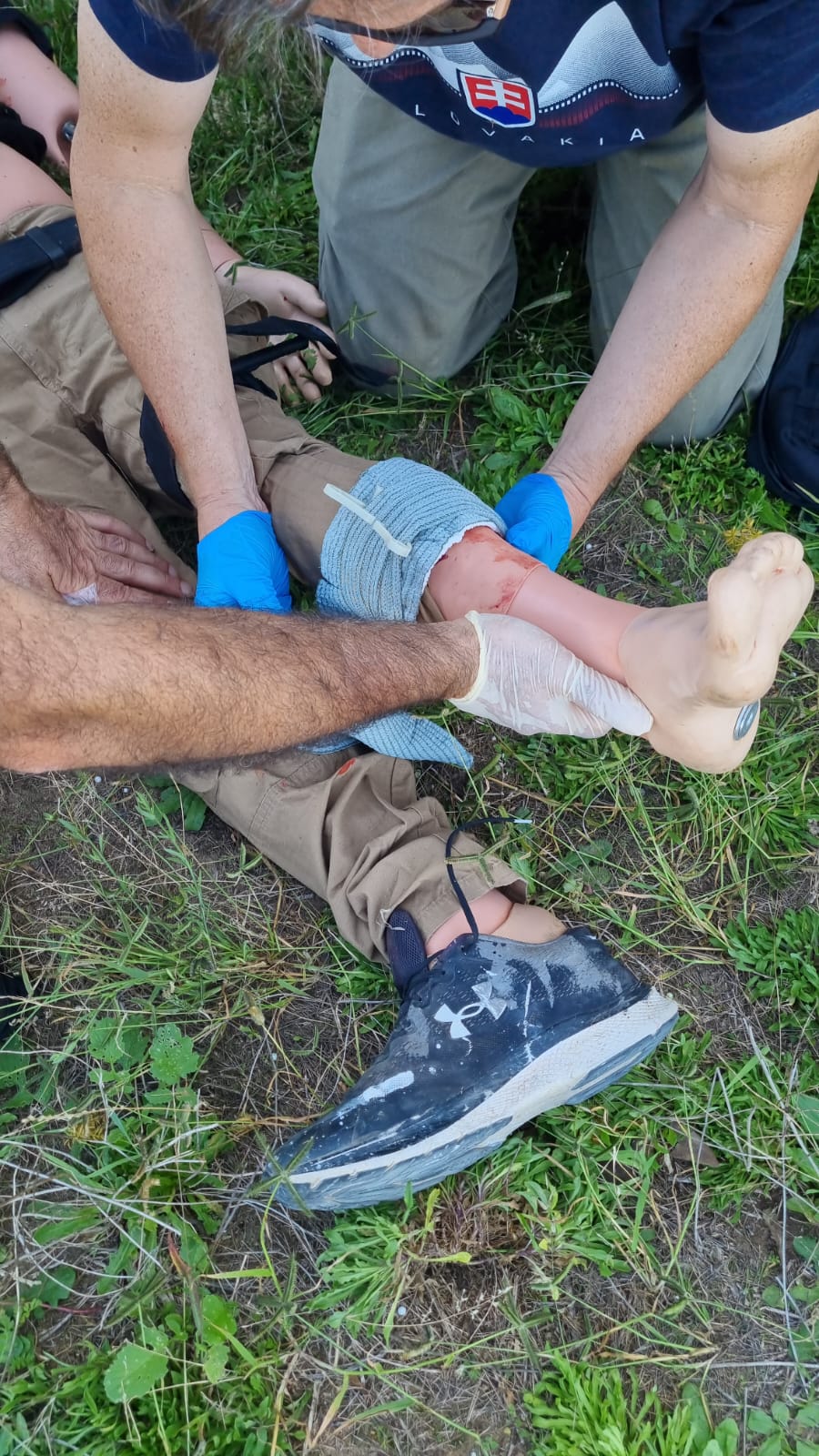
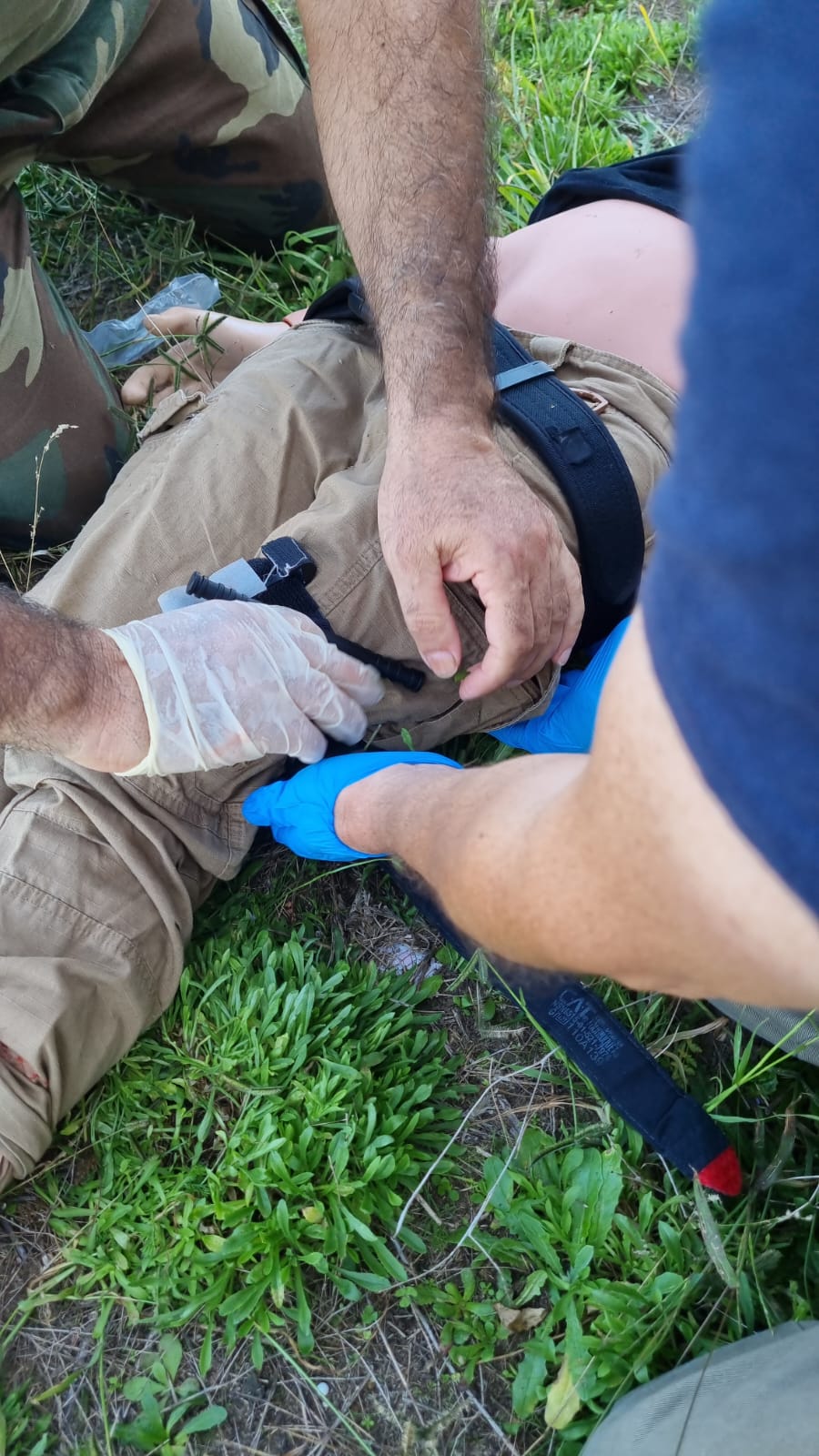
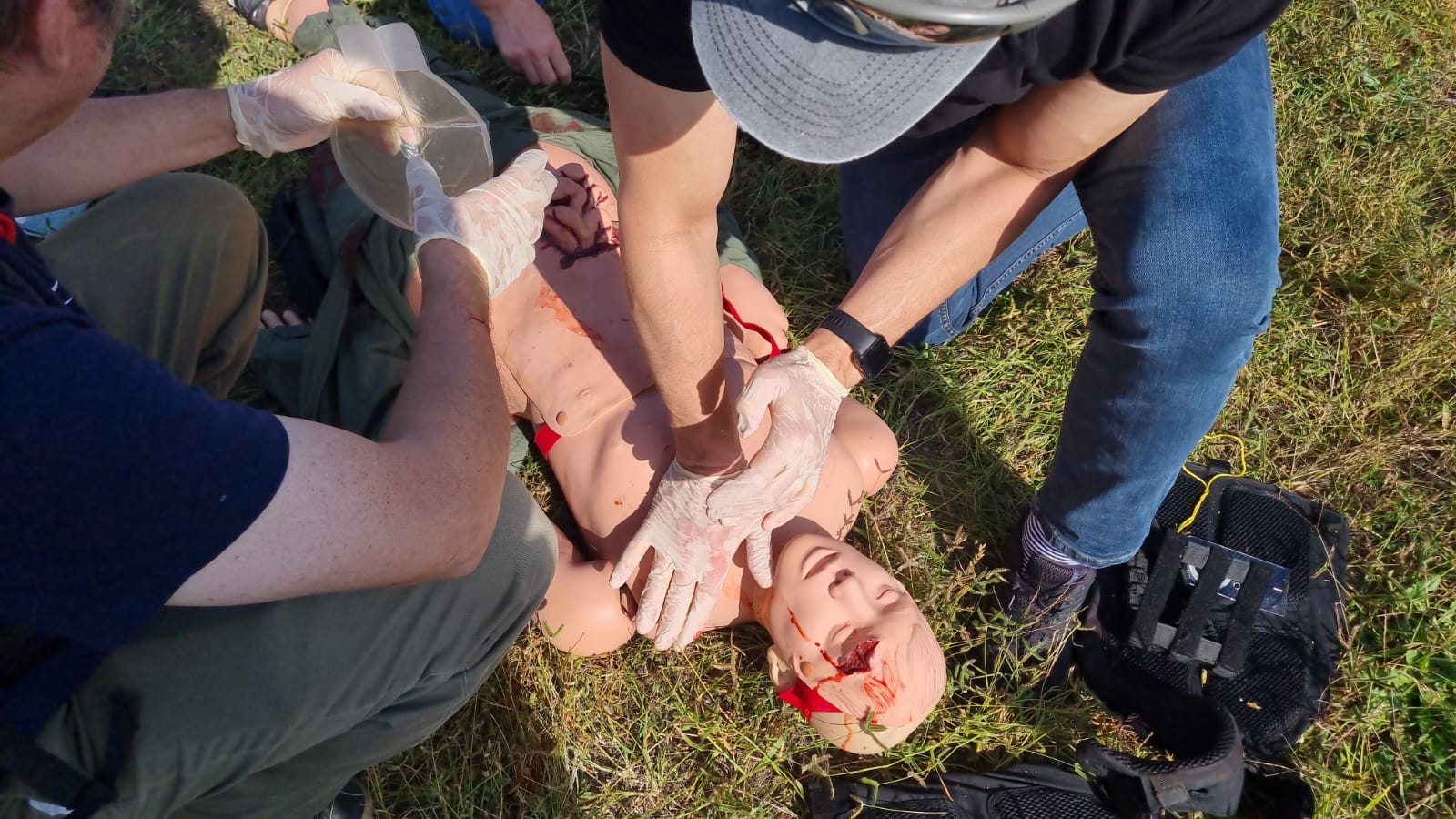
- Catastrophic haemorrhage control (Use of Tourniquets, Pressure (Israeli) Bandages, Hemostatic bandages and wound Packing
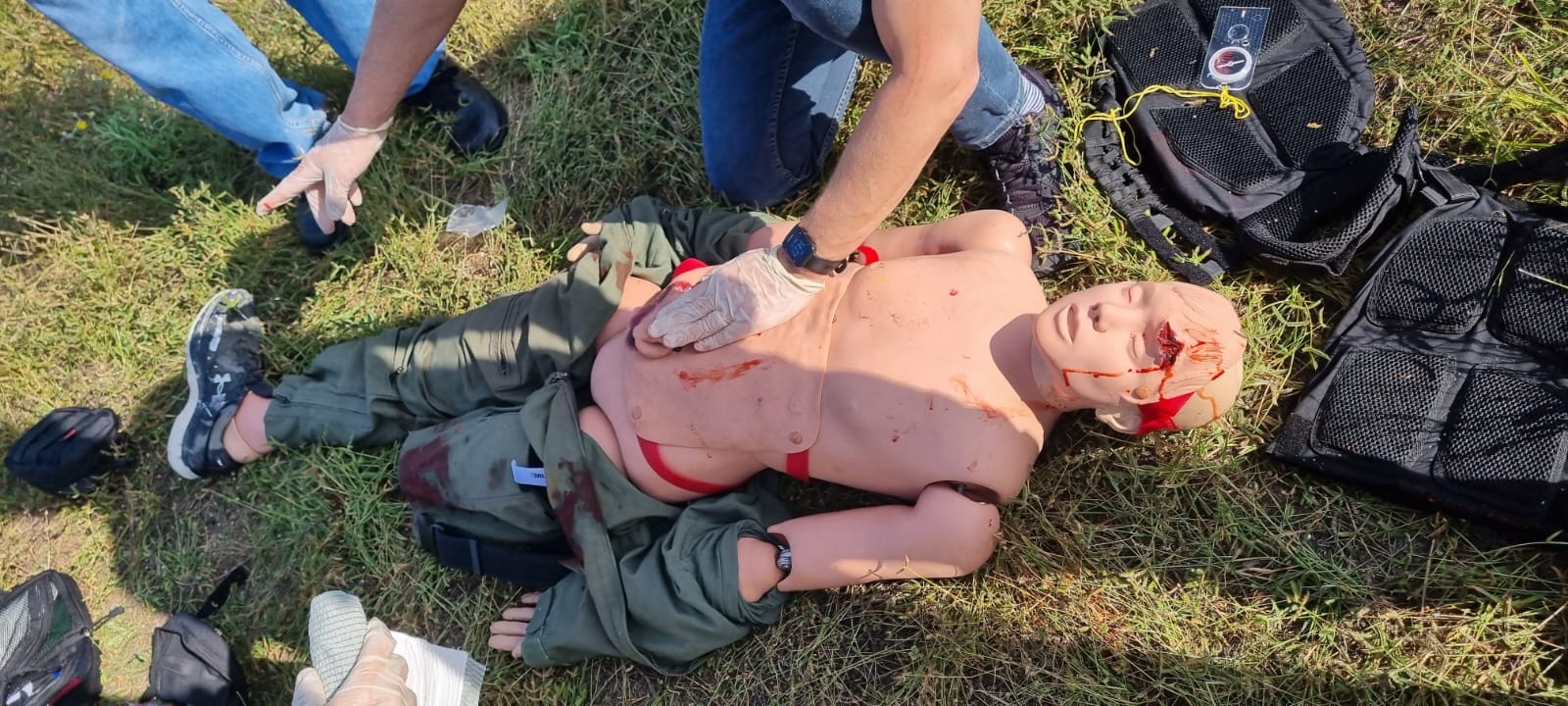
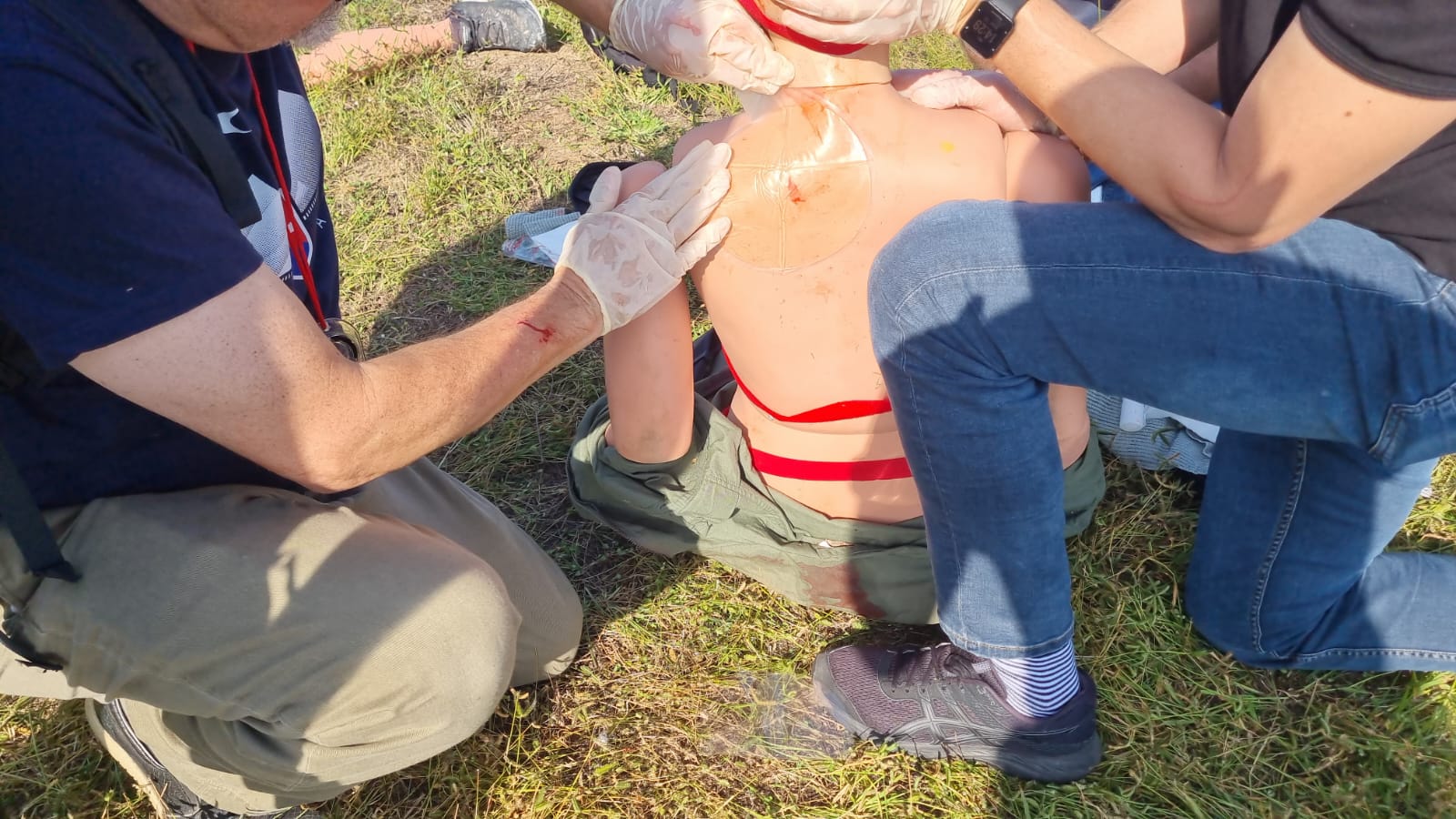
- Chest injuries and breathing management (use of Chest seals)
- Medical planning and Medical Intelligence
- Rescue Tactics
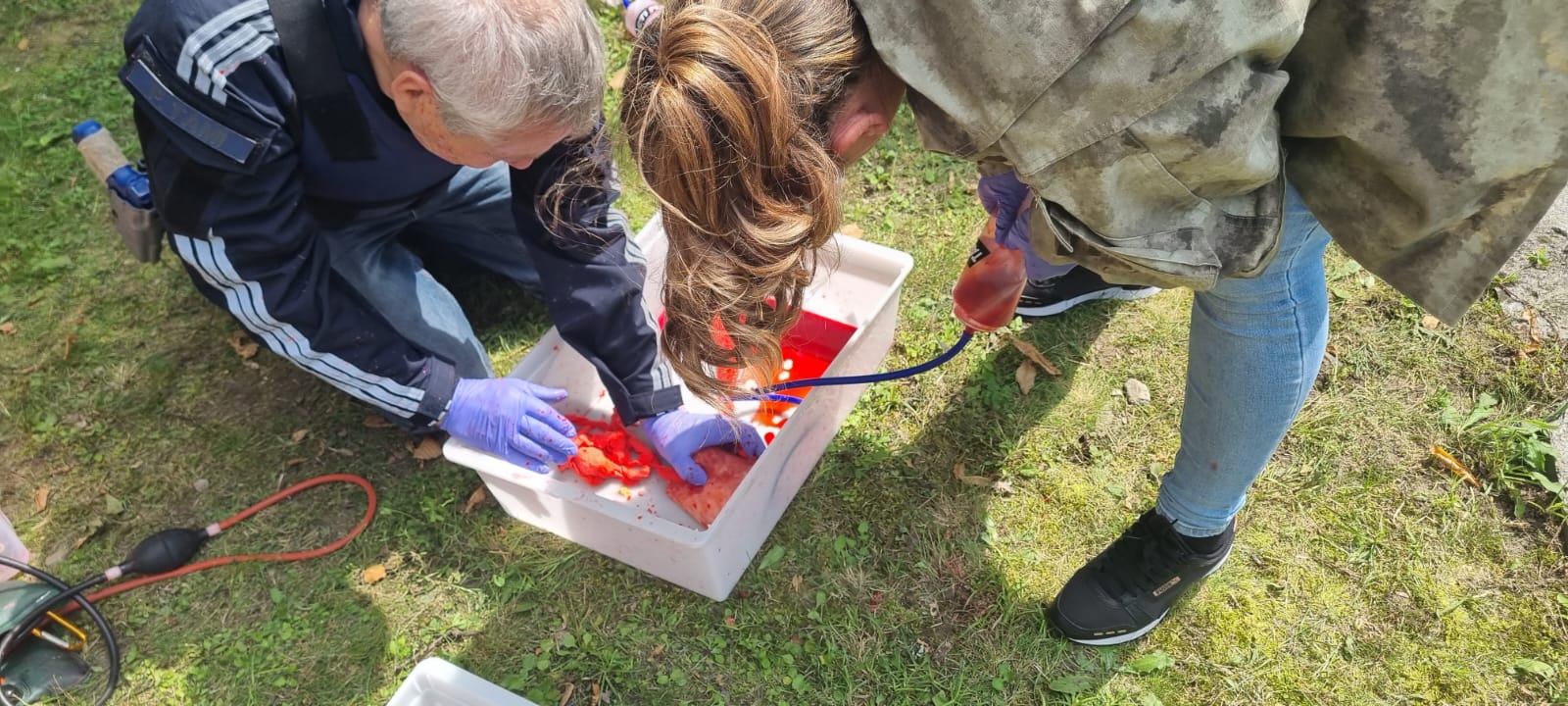
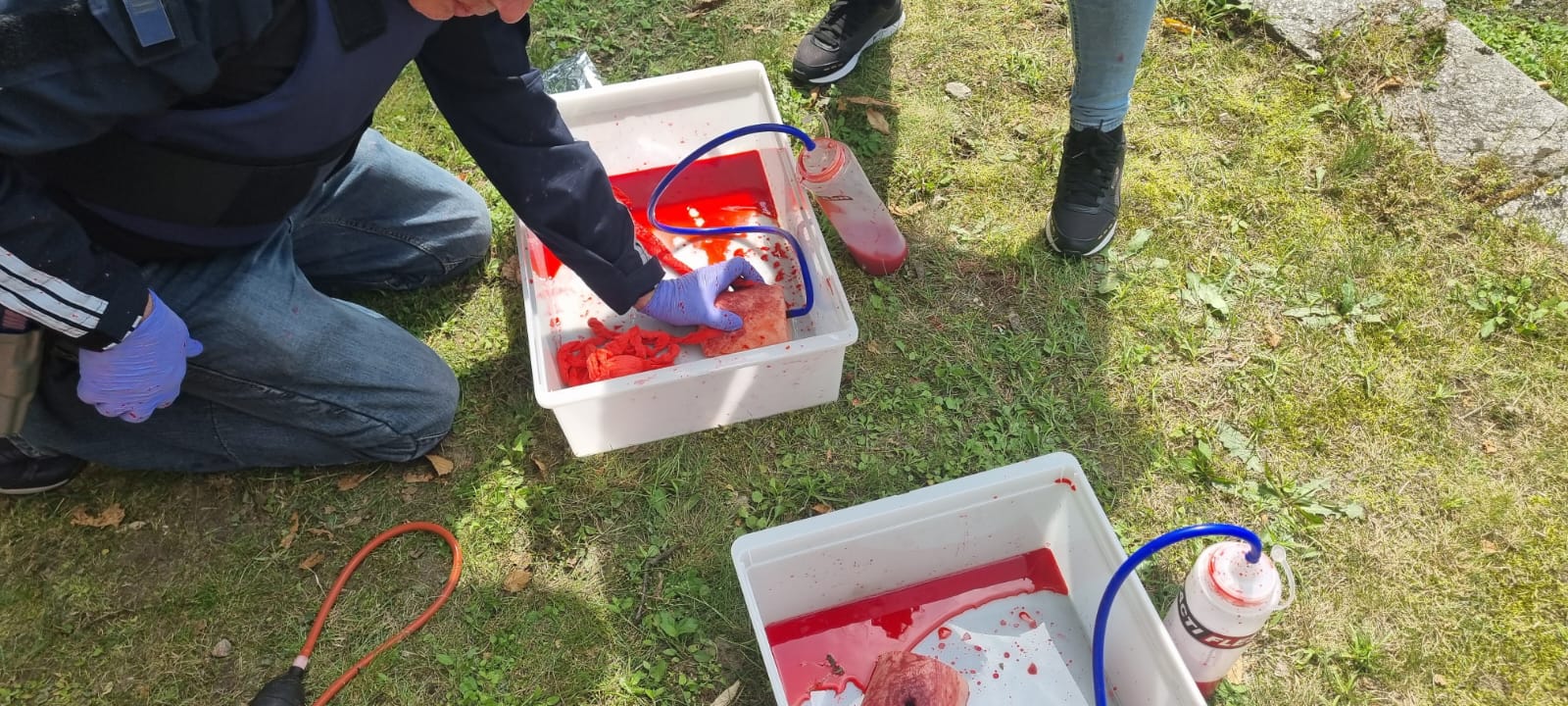
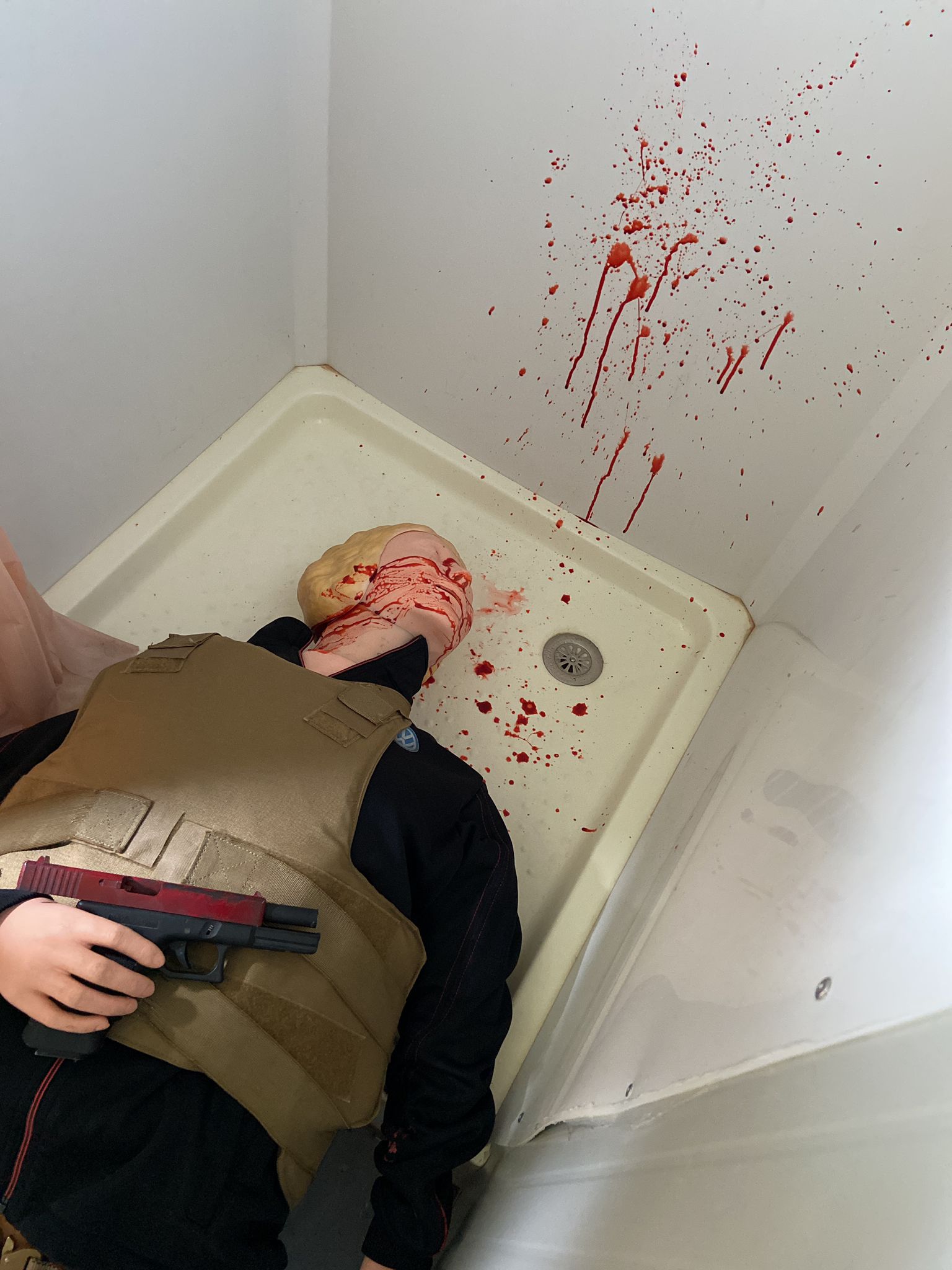
- Trauma moulages
Course Duration
The course run on a blended delivery mode, with a first online, distance-learning theory module followed by 1 practical, intensive day.
Entry Criteria
The entry is open to all learners that satisfy this minimum requirements:
- A good command of Italian, English or French language either spoken, read and written.
Course Delivery
The course is a combination of classroom theory and practicals.
Course Assessment
Assessment takes the form of:
- Skills demonstrations
- Medical simulations
What is Included
Personal IFAK for each student that remains at the end of the course
Classroom/Practical course, luch during the course, certifications
Course Languages
Italian, English, French
Course Location
Biasca, Ticino – Switzerland
Certification
Highfield International SMAT Combat Medic TECC Level 1 – Tactical Emergency Casualty Care
Saint Michael Awarding Certificate (Valid as Medic Course for the release of Security Officer Certification)

What is TECC?
The Tactical Emergency Casualty Care (TECC) guidelines are a set of best practice recommendations for casualty management during civilian tactical and rescue operations. Based upon the principles of Tactical Combat Casualty Care (TCCC), TECC accounts for the differences in the civilian environment, resources, patient population, and scope of practice from the military combat environment of TCCC. The Committee for Tactical Emergency Casualty Care (C-TECC) is modeled after the Committee for Tactical Combat Casualty Care (CoTCCC) and is comprised of a broad range of interagency operational and academic leaders in the practice of high threat medicine and fire/rescue from across the nation, including members from emergency medicine, emergency medical services, police, fire, and the military special operations community. C-TECC remains an independent civilian entity but maintains a close relationship with CoTCCC for guidance and support. Taking into account that wounding patterns and mechanisms of injury may be similar in civilian incidents involving ballistic and explosive wounding, TECC recommends treatment modalities based on the situation and available assets. The primary TCCC tenants of placing far forward timely medical care, and doing the right thing at the right time, are also paramount in the TECC guidelines. As with TCCC, TECC is divided into three phases of care based on the relationship of the provider, the casualty, and the threat. Considerable expertise and effort has gone into the development of a civilian operational medical standard in parallel to the successful guidelines of Tactical Combat Casualty Care. Known as Tactical Emergency Casualty Care, this new standard utilizes data and experiences from the military and accounts for the differences of operating in the civilian sector. The TECC guidelines will continue to be updated using evidence-based medical best practices and will remain under the custodianship of the Committee for Tactical Emergency Casualty Care.
15 disponibili